

If you are exploring home care for a parent or loved one in the Greater Toronto Area, you have almost certainly encountered the term “PSW”, personal support worker. But what exactly does a PSW do, how are they trained, and how do you know whether your loved one needs a PSW, a registered nurse, or something else entirely?
At Stay Home Forever, our CARF-accredited home care team in Markham includes trained personal support workers who provide daily care to seniors and individuals with complex needs across the GTA. This guide explains the PSW role in clear, practical terms, what they do, what they cannot do, and how they work within a broader care team.
KEY TAKEAWAYS
- A PSW (personal support worker) assists with activities of daily living: hygiene, dressing, mobility, meals, light housekeeping, and companionship.
- In Ontario, PSWs complete a 28–40 week training program and follow the Personal Support Worker Standards of Practice.
- PSWs are not regulated health professionals, they cannot perform wound care, administer injections, or make clinical assessments.
- The PSW role includes an important observation and reporting function, skilled PSWs are a critical early-warning system for changes in a client’s health.
- PSWs provide cost-effective daily support; registered nurses (RPNs/RNs) provide clinical care, many clients benefit from both working as a team.
- Social engagement and companionship are genuine components of a PSW’s role, not extras, consistent human connection is measurably linked to senior health outcomes.
What Is a PSW? The Personal Support Worker Defined
A personal support worker (PSW) is a trained care provider who assists individuals with activities of daily living (ADLs), the routine tasks that people need to carry out in order to live independently and safely at home. PSWs work in clients’ homes, in long-term care facilities, in hospitals, and in community settings across Ontario.
In Ontario, PSWs complete a standardized training program that typically runs between 28 and 40 weeks. The program is regulated by the Ontario government through the Personal Support Worker Standards of Practice and includes both classroom instruction and supervised practical placement hours. This training gives PSWs the skills and knowledge to provide safe, competent personal care, though it does not include the clinical medical training of a registered nurse (RPN or RN).
Personal Support Worker Duties and Responsibilities:
The duties of a PSW in a home care setting cover a broad range of personal care and daily living support. Understanding the full scope helps families set realistic expectations and identify exactly what level of care their loved one needs.
Personal Hygiene and Grooming
PSWs assist with bathing, showering, or sponge baths, hair washing and styling, oral hygiene and denture care, shaving, nail care (toenail care is typically referred to a podiatrist for individuals with diabetes or circulatory conditions), and dressing. This is often the first type of support families seek when a senior can no longer safely manage personal hygiene independently.
Mobility and Transfer Support
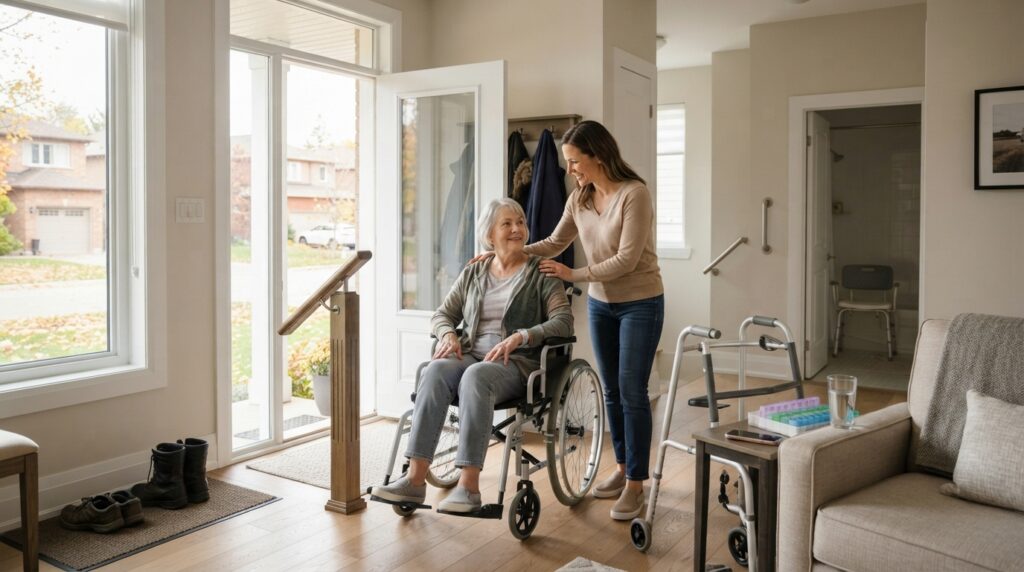
PSWs help individuals move safely within their home, getting in and out of bed, transferring to and from a wheelchair or commode, ambulating with a walker or other aid, and repositioning in bed for individuals who have limited mobility. Proper transfer techniques are a core component of PSW training to protect both the client and the caregiver from injury.
Meal Preparation and Feeding Support
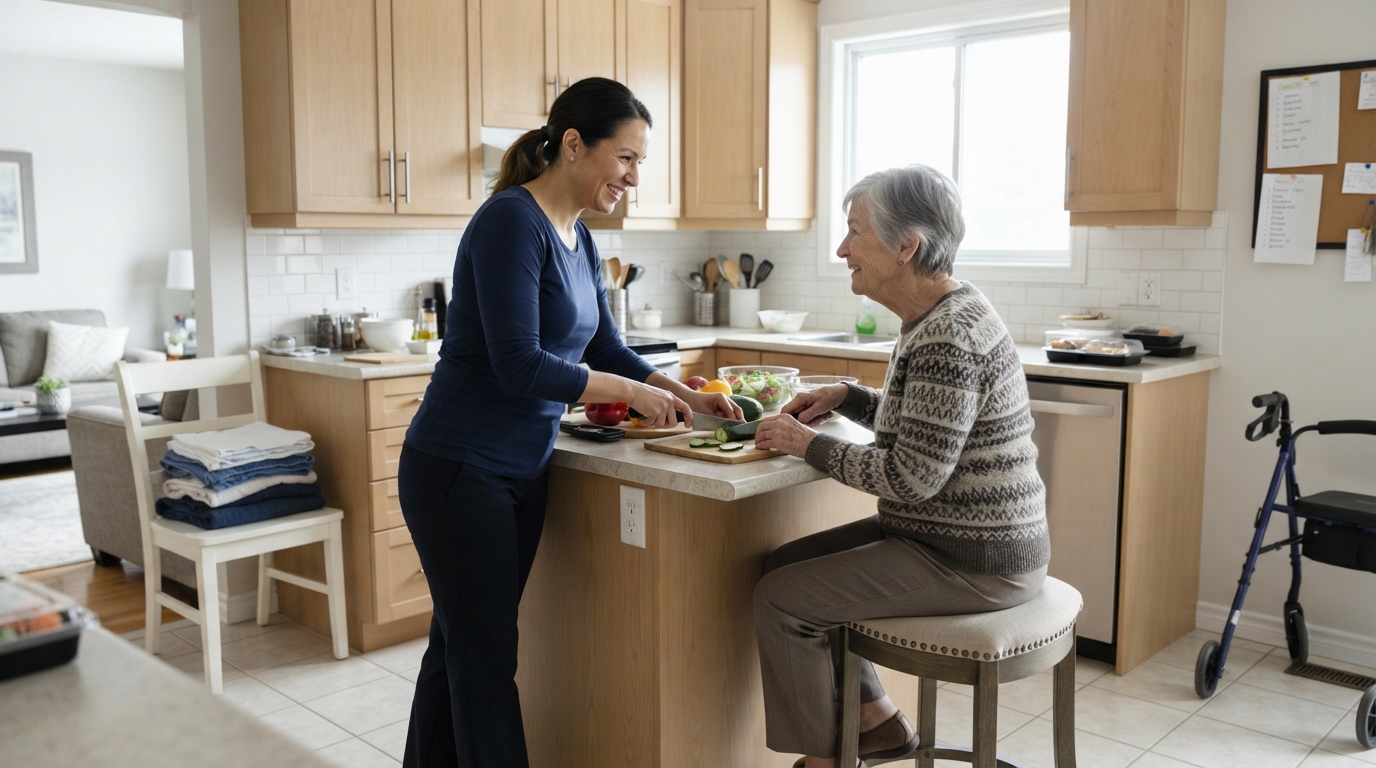
PSWs plan and prepare meals based on the client’s dietary needs, preferences, and any restrictions noted in their care plan. For clients who have difficulty eating independently, due to stroke, Parkinson’s, advanced dementia, or physical weakness, PSWs provide direct feeding support while preserving the client’s dignity.
Medication Reminders
PSWs provide medication reminders and observe that a client takes their prescribed medication as directed. This is distinct from medication administration, which is a clinical nursing function. A PSW can remind and observe; a regulated health professional (RN, RPN, or pharmacist) is required for any clinical medication management.
Light Housekeeping and Home Management
In addition to personal care, PSWs often assist with the light housekeeping tasks that keep a home safe and habitable: laundry, washing dishes, vacuuming, and general tidying. This support is often as important to a senior’s ability to remain at home as direct personal care, a cluttered, unsanitary environment creates fall hazards and health risks.
Companionship and Social Engagement
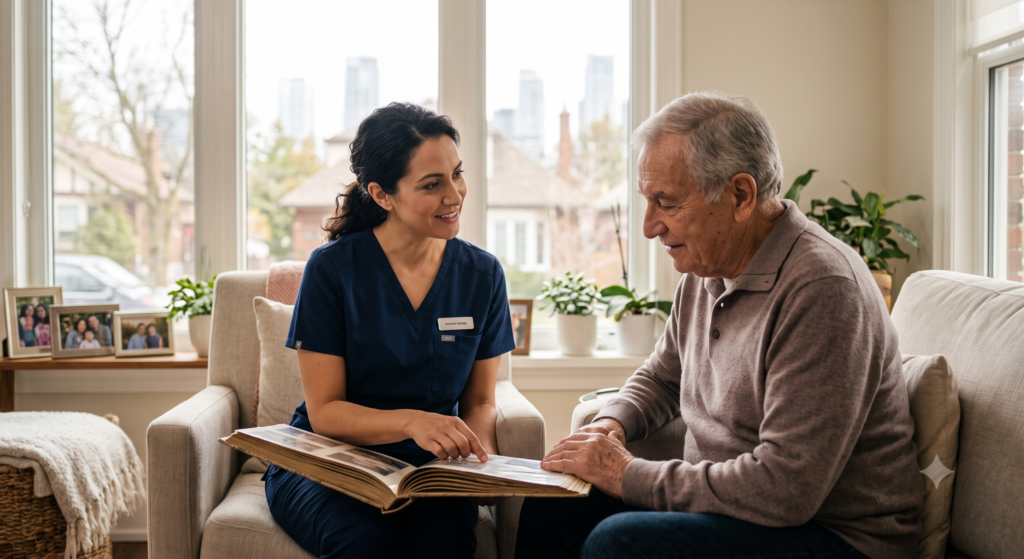
PSWs spend significant time with clients, and that time is not purely task-focused. Conversation, participating in activities the client enjoys, accompanying clients on outings, and simply being a consistent, caring presence are important elements of the PSW role. Social connection is a critical determinant of senior health outcomes.
Observation and Reporting
A skilled PSW is an important link in the client’s care team. They observe changes in a client’s condition, unusual fatigue, changes in mood or cognition, skin integrity concerns, changes in appetite, and report these observations to the supervising care coordinator or nursing team. Early identification of changes prevents hospital admissions.
What a PSW Cannot Do: Understanding the Scope of Practice
It is equally important to understand the boundaries of the PSW role, because misunderstanding them can create situations where a client’s clinical needs are not being adequately addressed.
PSWs are not regulated health professionals. They cannot perform wound care (beyond simple observation and reporting), insert or manage IV lines, administer injectable medications, make clinical assessments or diagnoses, or perform any invasive procedures. For clients who require these services, a registered practical nurse (RPN) or registered nurse (RN) must be involved in the care plan.
This is why a thorough needs assessment by a qualified care coordinator is the essential starting point for any home care arrangement, to ensure the right level of care is in place from the beginning.
PSW vs. Registered Nurse: Understanding the Difference
The distinction between a PSW and a registered nurse matters for both care planning and cost. PSWs provide non-clinical personal care and daily living support; registered nurses provide clinical and medical care. In Ontario, both can be part of a home care team, and many clients benefit from a combination of PSW visits for daily support and periodic nursing oversight for clinical monitoring.
PSW care is significantly less expensive than nursing care per hour, making it the appropriate and cost-effective choice for the majority of home care hours required by seniors. Nursing hours are reserved for clinical tasks that require that level of training and licensure.
PSW Careers in the GTA: Joining Stay Home Forever
Stay Home Forever is actively growing its team of personal support workers across Markham & the GTA. If you are a trained PSW, or currently completing your PSW certification, and are looking for meaningful work with a CARF-accredited home care provider, we want to hear from you.
We offer competitive compensation, consistent scheduling, ongoing training, and a team culture built around quality care and caregiver wellbeing. Our caregivers work with clients they know, in settings that build genuine relationships, not the rotating-roster model that contributes to inconsistent care.
Whether you are looking for PSW support for a loved one in Markham or the GTA, or you are a trained PSW looking to join a growing CARF-accredited team, call Stay Home Forever at 416-701-0181. We will explain your options, walk you through the assessment process, and help you find the right fit. Book a Free Consultation →
FAQs
- What does a PSW do?
A Personal Support Worker (PSW) helps people with personal care and everyday activities, including bathing, dressing, grooming, mobility, meals, and companionship. PSWs may also help clients maintain safe and consistent daily routines at home. - What are the main duties of a PSW?
Common PSW duties include personal hygiene, dressing, toileting, mobility assistance, meal preparation, companionship, light household tasks, and observing and reporting changes in a client’s condition to the appropriate caregiver or health professional. - What can a PSW do in Ontario?
PSWs in Ontario can provide personal care and assistance with activities of daily living. Their specific responsibilities depend on their training, employer or home-care provider, the client’s care plan, and applicable policies and requirements. - What is the difference between a PSW and a nurse?
A PSW primarily provides personal care and assistance with daily living, while a nurse is a regulated health professional with broader clinical responsibilities, such as assessing patients and providing nursing care within their scope of practice. - Can a PSW provide care at home?
Yes. PSWs commonly provide personal support in a client’s home, helping with personal care, mobility, meals, companionship, and other daily activities. Home care can help people maintain their routines and independence while living at home. - When should someone consider hiring a PSW?
A PSW may be helpful when someone needs regular assistance with personal care, mobility, meals, or everyday activities but would prefer to remain at home. The appropriate level of support depends on the individual’s needs and care plan.

Share Now: